The Playbill Before the Programme
See how the historical playbill served as an announcement, an audience guide, and a keepsake—and learn what its printed details can reveal about a performance.
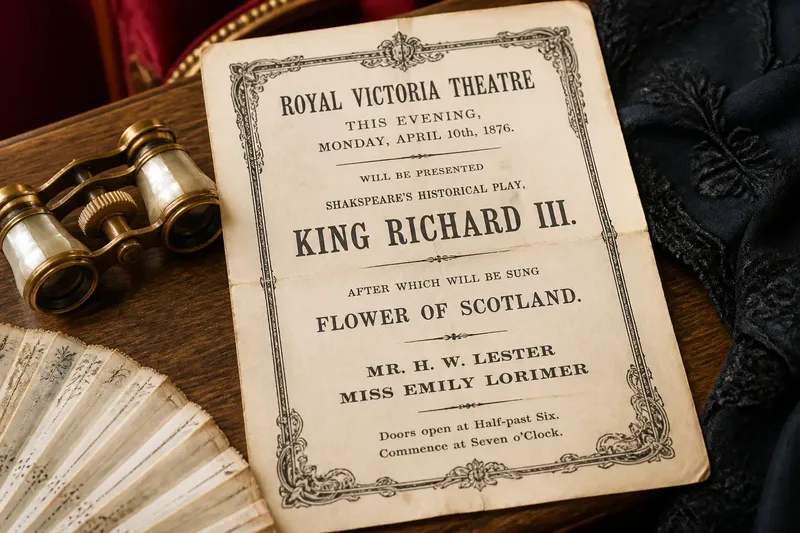
What can a historical playbill tell you about an evening at the theater? A playbill could announce an event, help an audience follow its offerings, and later serve as a keepsake—but its contents depended on the theater, period, and occasion. Treating it as a single, fixed format hides the useful differences between those roles.
Announcement and audience
In many theatrical settings, a bill was a printed notice of what a venue was presenting. It could name a play or other attraction and identify the place or performers. The exact details varied; no one layout or set of contents defines every historical playbill.
As an announcement, the sheet addressed prospective spectators. Its title and prominent wording could draw attention, while practical details helped a reader identify the event. A bill might also advertise several offerings in one evening. Those features served the theater’s communication needs, but they do not prove how every spectator encountered or understood the notice.
Read the printed information as evidence of what the theater chose to advertise. A bill may make one title prominent and give less space to other items. That hierarchy can suggest the event’s presentation to the public, but it cannot tell you exactly what every audience member valued.
A guide to the evening
Some bills list an order of attractions or name performers. That information gives an audience a basic frame for the event: what may come first, what follows, and who is associated with the performance. It is not the same as a full account of what happened. A live event could depart from its printed plan, and the sheet may leave out details.
Where a bill offers a sequence, it can help a reader understand that an evening may include more than a single play. Names can also connect the advertised event to its performers. These details make the sheet useful beyond its initial announcement, though they remain selective rather than comprehensive.
Credits and limits
A list of performers or contributors records names the theater chose to print. It can help identify a cast or show which kinds of work the bill acknowledged. But printed credits do not capture every contribution, explain an individual performance, or establish that an advertised person appeared as planned.
For theater history, distinguish between what the document states and what you infer. A surviving bill is evidence of an advertised event and its printed framing. On its own, it cannot recover performance style, audience response, or changes made during the evening.
From paper to keepsake
A spectator might keep a bill because it identifies a particular occasion. Its title, cast, sequence, or venue can prompt a memory later. That afterlife depends on how someone used the paper; it does not mean the theater originally printed it as a souvenir.
A decorative border may catch the eye, but the information can matter just as much to someone who keeps the sheet. Still, paper preserves prompts, not the full experience: it cannot reproduce a voice, a pause, or the audience’s response. Avoid treating every flourish as a hidden message unless the design clearly directs attention or conveys identifiable information.
Reading a playbill?
What does a historical playbill record?
It records the details printed for an advertised theatrical event, which may include a title, venue, performers, or sequence. The contents vary, so check the individual sheet rather than assuming a standard format.
How does a playbill differ from a programme?
A programme often gives a fuller guide, such as role assignments, production credits, or contextual notes. The terms and formats vary across theaters and periods, so the distinction is a useful comparison rather than a universal rule.
Can a playbill confirm what happened onstage?
It confirms what was printed, not necessarily what took place. Compare its claims with other available evidence before drawing conclusions about a performance.
Why might someone keep a playbill?
A bill can identify a particular event and prompt a memory of it. Its value as a keepsake may come from the occasion or the printed details, whether or not it was designed for collecting.
Read the evidence carefully
When examining a historical playbill, move from its visible statements to cautious questions about its purpose. For each observation, decide what it supports and what it leaves unresolved.
- Event title: If a title is clear, identify the advertised offering; if it is absent or hard to read, do not guess from the design alone.
- Venue: If the sheet names a venue, record it as printed; if it does not, leave the location unresolved until another source supports it.
- Sequence: If items appear in an ordered list, describe that printed order; if no order is given, do not claim the bill establishes the evening’s sequence.
- Performers: If names are listed, treat them as advertised credits; if a performer is not named, do not infer that the person was absent.
- Other contributors: If the sheet credits other work, note which roles it acknowledges; if credits are limited, do not treat the list as a complete account of production labor.
- Design: If a border or type treatment emphasizes an item, describe that visible emphasis; if its purpose is unclear, avoid assigning it a symbolic meaning.
- Condition: If folds or marks are visible, describe them as physical traces; if their cause is unknown, do not claim they prove who carried or kept the sheet.
Say you are examining an invented playbill that names a theater, prints a principal play followed by a song, and lists two performers without identifying their roles. First, record the venue and title as printed. Next, describe the song as a listed item after the play, not as proof that the order was followed. Then note the two names as advertised performers, while leaving their roles and any unlisted contributors unresolved. The result is a careful account of what the sheet supports, with no claim about the full performance.
It is not worth the effort to assign a hidden meaning to every ornamental mark or infer audience reactions from a title’s size alone. Give attention to the concrete evidence: the advertised offerings, any printed order, named people, and the limits of what the sheet records.
What the sheet preserves
A playbill can be an announcement, a partial guide, and a keepsake without those functions replacing one another. For theater history, that overlap makes the document useful: it shows how an event was presented on paper while reminding the reader that the performance itself exceeded the page.
When you encounter a historical playbill, begin with what a spectator could read directly, then separate those statements from interpretation. The history of the playbill before the programme is not a simple march from notice to comprehensive guide; it is a varied record of theatrical communication, shaped by particular venues and occasions.
If the sheet survives with folds, stains, or other marks, record their appearance without assigning a cause you cannot establish. Set those physical traces beside the printed details, and you can describe both what the theater offered and what remains beyond the paper.