A Black Box Is Not a Blank Box
Black-box theatre is adaptable, not neutral. Learn how its walls, doors, lighting, and backstage traces shape attention—and what to leave visible.
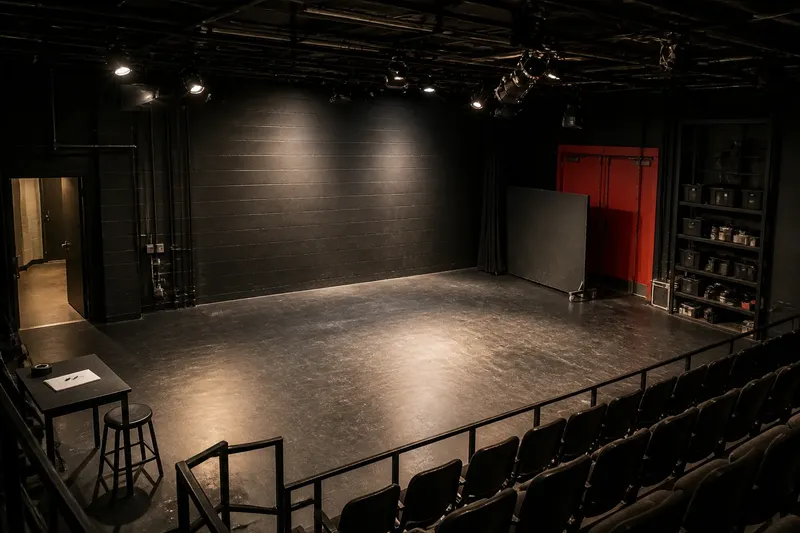
What should you notice in a black-box theatre before deciding how it will serve a play? Start with its doors, walls, lighting positions, and backstage traces. Black-box theatre can look bare, but those features already frame the action and guide audience attention.
Rather than comparing seating layouts, inspect what the room itself communicates. A doorway can suggest an exit from the play’s world or an ordinary route backstage. A visible lighting bar can feel like part of the theatrical event, while an uneven wall may compete with a performer for attention.
Read the room
Walk the space before adding scenery. Note which surfaces catch light, where the audience is likely to enter, and what can be seen beyond the playing area. Look for practical details such as switches, storage doors, exposed cables, and equipment that may remain visible during a scene.
Then ask what each feature might mean to a spectator. A scuffed floor may support a setting that feels used, but it could distract from a delicate moment. A plain wall can help a performer’s silhouette stand out, or it can look unfinished if the production depends on a detailed world.
Use existing features
A black box does not need to hide every trace of the theatre. Leave a feature visible when it helps establish tone, directs attention, or makes the audience aware of the act of performance. Conceal it when it pulls attention away from the scene without adding meaning.
Check doors for their effect on entrances and exits. A door that opens directly into a corridor may make an arrival feel casual; a concealed entrance can make it seem sudden. Confirm that any proposed use is practical with the venue staff, especially if it changes how people move through the room.
Walls and floors can also do useful work without becoming scenery. A rough surface may suggest age or neglect, while a clean, unadorned wall can keep focus on speech and gesture. Avoid treating every visible mark as a flaw that must be covered.
Choose technical focus
Lighting and sound equipment shape what the audience sees and hears, even when the production uses little scenery. Look at where lighting instruments can be aimed and where their shadows fall. Listen from the places spectators will occupy for echoes, noisy ventilation, and sounds from adjacent rooms.
Make a short room note with one observation and one decision for each feature:
- Door: Check whether it is visible from the playing area. If it supports an entrance or exit, keep it in view; if it draws attention for no dramatic reason, consider masking it.
- Wall: Observe its color and texture under the available light. If it helps define the setting, leave it exposed; if it competes with performers, simplify or cover that section.
- Floor: Check whether a dropped prop or a performer’s movement will stand out. If the action remains legible, use the floor as it is; if not, adjust the playing area or add a restrained surface treatment.
- Lighting position: Observe whether equipment or shadows enter the audience’s view. If the visible rig suits the performance, retain it; if it distracts, ask the venue team about a different focus or masking.
- Room sound: Listen for echo, ventilation, or noise from outside. If speech remains clear, keep the setup simple; if it does not, consult the venue’s sound staff about placement or amplification.
- Backstage trace: Check whether storage, cables, or work areas can be seen. If they contribute to the theatrical image, leave them visible; if they read as accidental clutter, tidy or conceal them.
It is not worth the effort to disguise every pipe, seam, or scuff. Cover a feature only when it changes the audience’s reading of the scene; otherwise, time spent hiding it may solve a problem no one is having.
How should you assess the room?
What should you inspect first?
Begin with the features the audience will see and hear: entrances, walls, floor, lighting equipment, and background noise. Record the observation and the decision it suggests before adding scenic elements.
Can a bare wall work as scenery?
Yes, if its color, texture, or scale supports the performance’s atmosphere. If it looks unrelated to the world of the play, a simple change in lighting or a limited scenic treatment may help.
When should a technical feature be hidden?
Hide it when it distracts from the action and does not contribute to the intended image. If the feature supports the production’s style, leaving it visible may be clearer than disguising it.
Test the choices
Say an invented production team finds a bright red storage door behind the playing area, a gray wall, and a soft ventilation hum. The team first checks whether the door can be seen during the central scene; it can, and its color pulls attention from the actors. They decide to mask it with a neutral panel. Next, they try the gray wall under the planned lighting; it keeps the performers distinct, so they leave it exposed. Finally, they listen to a spoken passage with the ventilation running; the words remain clear, so they keep the sound setup unchanged. The resulting room is simpler without hiding features that already serve the scene.
Use black-box theatre’s flexibility to make deliberate choices about what enters the audience’s attention. Write down the room’s most noticeable features, then decide which should lead, support, or recede. That small distinction can keep a practical space from feeling accidental.